Nick's Epiphanies
Info
My investment philosophy is based upon the teachings of Nick Murray and Warren Buffet.
Who is Nick Murray?
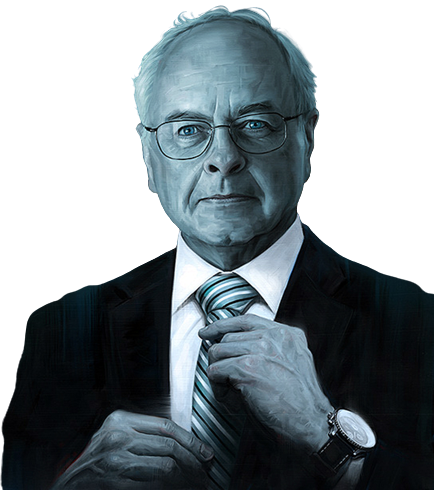
Nick Murray is the Advisor to Advisors and prolific author. With 50+ years of experience in the investment markets, noted author, he is an expert in the art and science of helping individual investors work toward reaching their investment goals. He is the recipient of the 2007 Malcolm S. Forbes Public Awareness Award for Excellence in Advancing Financial Understanding.
- Nick's website
- Read previous editions of Nick Murray's Client's Corner
Nick Murray's 20 Investment Epiphanies
Nick's Preface
“On my 41st anniversary in our great profession, I did a piece for Financial Advisor magazine called “Forty-One Epiphanies,” listing that number of great realizations I'd experienced during those years. Below is an excerpt of the 20 epiphanies that are client-oriented." ―Nick Murray
-
Epiphany #1
Most people who invest most of their capital in fixed income investments as they go into retirement will run out of money well within their lifetimes, and will die destitute and dependent upon their children. Equities = life. Bonds = death-in-life.
-
Epiphany #2
Optimism is the only realism. It is the only worldview that squares with the facts and with the historical record.
-
Epiphany #3
Get a year's living expenses in a money market fund as quickly as you can, even if you have to live on coffee and rice while you're saving toward this goal.
-
Epiphany #4
The origin of all wealth is threefold: personal initiative, hard work, and thrift. Tell me the percentage of your income that you're putting away, and I'll tell you whether you're going to achieve your financial goals.
-
Epiphany #5
The world does not end. It only seems to be ending. This time is never different.
-
Epiphany #6
Americans say they want safety and income. What they really want is all the income they can get, and the illusion of safety. More money has been lost in the quest for the chimerical combination of safety and high yield than in all the stock market crashes in history.
-
Epiphany #7
The only sane investment objective in retirement is an income that grows at a minimum of the same rate at which one's cost of living is rising.
-
Epiphany #8
Disciplined diversification is a pact with heaven: I will never own enough of any one thing to be able to make a killing in it; I will never own enough of any one thing to be able to be killed by it.
-
Epiphany #9
All investment “new eras” end in ruin, because all inventions follow the same arc, from miracle to commodity.
-
Epiphany #10
Price and value are inversely correlated. When the price of any investment sector is rising, its value is declining; the converse is also true.
-
Epiphany #11
The most fascinating aspect of all financial crises is their essential sameness.
-
Epiphany #12
Get out of debt, and stay out of debt. Keep your nut as low as you possibly can, especially in “good times.”
-
Epiphany #13
What goes around comes around, even if it's on a very long, elliptical orbit.
-
Epiphany #14
Inflation is always and everywhere a monetary phenomenon.
-
Epiphany #15
The advance is permanent. The declines are temporary. There have been thirteen bear markets with an average decline of 30% since the end of World War II. The first one started on May 29, 1946. That day, the S&P Index closed at 19.5 As I write, thirteen ends-of-the-world later, it is 1,575. Stocks are up nearly eighty times over these seven decades because earnings are up nearly eighty times.
-
Epiphany #16
The dominant determinant of the real long-term returns real people really get isn't investment performance. It's investor behavior.
-
Epiphany #17
Protectionism always raises consumer prices above where they would otherwise be; it also invariably destroys more jobs than it “saves.”
-
Epiphany #18
All investments are income investments. They are made for the production either of current income, or of future income, or of income for someone else. The only sane test of an investment's long-term income-producing potential is its long-term total return, not its current yield. By that one sane test, equities are a far better income investment than bonds.
-
Epiphany #19
The computer in your cell phone is a million times smaller, a million times cheaper, and a thousand times more powerful than the mainframe computer used by E.F. Hutton & Company on the day I joined that firm, May 1, 1967. This is a billionfold increase in computing power per dollar. In the next quarter century, there will be another such billionfold increase, at which point technology will have essentially solved all our current problems: energy, the environment, poverty and disease. This is the exact worst moment in human history to turn pessimistic.
-
Epiphany #20
Ten thousand people a day are retiring in this country every day, without a clue that their basic financial challenge is not loss of principal but erosion of purchasing power.
Nick's Best Quotes and Musings
-
“Successful investing is counterintuitive.”
-
“I own mainstream equities for two reasons: (1) second only to love, the most powerful force on earth is human ingenuity; and (2) equities are the only asset class that fully captures human ingenuity.”
-
“The stock market has been going up all your life!”
-
“The only way to achieve the full permanent advance of equities is to be willing to ride out their full temporary decline.”
-
“It is those 'risky' equities that provide the greatest long-term safety of principle.”
-
“Insure against what can go wrong in order to acquire the luxury of investing for what can go right.”
-
“It's never the wrong time to put some more money with the right money manager.”
-
“We are long-term owners of well-diversified portfolios of superior companies that have consistently demonstrated their ability, in time, not merely to survive but to triumph over any and every earthly species of 'crisis.'”
-
“No one knows for sure why the equity market does what it does on any random day. And no long-term, goal-focused, patient, disciplined investor cares.”
-
“Never interrupt the compounding.”
-
“The average person's rather bizarre view of the stock market is primarily due to a loss of long-term perspective.”
-
“The patient, disciplined long-term investor has historically been rewarded for standing fast in a crisis.”
-
“Those who judge their portfolio by its performance relative to some narrow benchmark are focusing on an issue that is largely irrelevant to their ultimate financial success. The only benchmark that you should care about is one that indicates whether or not you’re on track to accomplish your financial goals.”
-
“The economy is not at all correlated to the markets. It is one of the best fictions of the culture. The culture believes that the economy drives the market and thus is predictive. Wrong. This is one reason why we invest in companies not countries.”
-
“An intelligently diversified equity portfolio will always 'underperform' some narrow sector of stocks. That's how you know you're truly diversified.”
-
“The only way you can lose money is to mistake a temporary decline for a permanent loss.”
-
“Volatility isn't really risk but uncertainty.”
-
“The economy is not at all correlated to the markets. It is one of the best fictions of the culture. The culture believes that the economy drives the market and thus is predictive. Wrong. This is one reason why we invest in companies not countries.”
-
“Without an adequately compensated advisor to help with selection and discipline, the individual investor will simply make all the classic and horrendous mistakes.”
-
“Defend purchasing power with equities, rather than defending principle with bonds (or other fixed accounts).”
-
“The cardinal tenet of my philosophy is that all long-term investment success comes from acting on a plan, while all failure is precipitated on reacting to the markets.”
-
“Volatility is merely randomness around a permanent uptrend.”
-
“EQUITIES: The only asset class that fully captures human ingenuity, which is the most valuable asset on earth.”
-
“I suggest that perhaps if we checked our actual dividend income every 90 days instead of checking our account balances every 90 minutes, we might become better investors.”
-
“Permanent loss of capital in equities has no historical precedent. Permanent loss in a well-diversified equity portfolio can only be triggered by an investor's irrational decision to sell in a decline.”
-
“The dominant determinant of long-term, real-life financial outcomes is not investment performance. It is investor behavior.”
-
“You must tune this stuff out, it doesn't matter. The economy and government are uncorrelated to the market. Don't make investment policy out of your distaste for the government.”
-
“Timing the market is a fool’s game, whereas time-in the market is your greatest natural advantage. ”
-
“Always make investment policy decisions based upon history rather than on headlines.”
-
“Every crisis has appeared to be totally unprecedented as we were going through it. Just as this one does. This time is no different.”
-
“I will never own enough of any one thing to be able to make a killing in it. Nor will I ever own enough of any one thing to be able to be killed by it. Diversify.”
-
“We’re not even investing in “the stock market” as such. Rather, we are investors in companies.”
-
“Equities are the ideal solution to clients’ need to accumulate enough capital to retire comfortably during their working lives. And then as the ideal (if not the only) vehicle for increasing their income further and further above consumer inflation through three decades of a two-person retirement.”
-
“Our plan continues to anticipate that at least 20% of our invested capital will appear to disappear temporarily about every five years or so.”
-
“The Fundamental Retirement Question: Will I outlive my money, or will my money outlive me?
-
The Fundamental Retirement Challenge: To keep my retirement income growing as my cost of living continues to increase.”
-
“Gold isn't an investment at all, it just sits there. It doesn't produce anything.”
-
“When stock prices are going down, the enduring value of the underlying companies is going up.”
-
“Good markets only teach bad lessons.”
-
“Risk is measured as the probability that you won’t meet your financial goal. Investing should have the exclusive objective of minimizing this risk.”
-
“We are goal focused and planning driven, in a culture that is market focused and performance driven. We are planning long term, patient, disciplined investors. We build portfolios based upon your goals, we look neither to the left at market volatility, nor to the right at economic news but straight ahead at your retirement.”
-
“No one knows for sure why the equity market does what it does on any random day. And no long-term, goal-focused, patient, disciplined investor cares.”
-
“The great truth is that the premium return of equities is earned purely by a willingness to ride out their temporary declines. Yet it is those temporary declines upon which human nature fixates.”
-
“Volatility is not risk. If you can't sit through a -15% temporary decline every year, and an average -30% temporary decline every 5 years, you have no business being an equity investor.”
-
“I don’t know what 'the stock market' is going to do over the next 12 months; neither does anyone else. And it doesn't matter.”
-
“Bull markets go on far longer than bear markets do; they increase equity values far more than bear markets diminish them.”
-
The economy can’t be forecast. The market can’t be timed. Therefore, the correct time to buy equities for the long run is whenever you have the money. By the same logic, the correct time to sell equities is whenever you need the money. Everything else is commentary.
-
“Staying fully invested during temporary market declines is the only sure way to capture the entirety of the market’s permanent advance. It is not possible consistently to sell out of falling markets, and later buy back into already advancing markets.”
-
“The more often you trade, the lower your return. The more often you go in and out of the market, the further below the index your returns will be. Hence we don't do market timing.”
-
“Never try to make long-term investment strategy out of short- to intermediate-term disruptions.”
-
“By the time investors become convinced that a crisis has passed, the market will long since have recovered, and they will have missed a huge part of a historic recovery.”
-
“Today's financial crisis invariably becomes yesterday's news.”
-
“Every day you hang in there, your reinvested dividends are buying more shares at fire-sale prices from somebody who’s panicking out — who’s making the mistake you refuse to make.”
-
“The best predictor of the trajectory of a market recovery is the trajectory of the previous decline.”
-
“No financial, fiscal, monetary, economic or political crisis ever in the history of the world has been capable of inflicting a permanent loss on equity values.”
-
“Long-term the market is completely predictable. Short-term it is utterly unpredictable. I know two things: 1) The market goes up. 2) The market goes down. I don't know when they happen, nor how long they last (and I don't care).”
-
“It is the engine that drives the returns. The premium long-term return of equities is simply an efficient market’s way of pricing in their extreme randomness in the short term.
-
Equities pay 10% long-term because in any given year they might be up 20% or down 20%, and you’ll never know which.”
-
“Dollar Cost Averaging is a strategy in which mutual fund shares are purchased in fixed dollar amounts every month, regardless of the market. Thus, as prices rise fewer units are bought, and as prices fall more units are bought. Dollar Cost Averaging is almost real-time re-balancing.”
-
“Virtually no portfolio strategy more reliably produces worse returns than performance-chasing.”
-
“No financial, fiscal, monetary, economic or political crisis ever in the history of the world has been capable of inflicting a permanent loss on equity values.”
-
“Every crisis has appeared to be totally unprecedented as we were going through it. Just as this one does. This time is no different.”
-
“We create robust plans by looking back over very long time periods.”
-
“All the money that has ever been 'lost' in all the temporary equity market declines have always returned to other people: long-term investors with faith in the future; patience, and the discipline to continue working their long-term plan.”
-
“In three-decade baby boom retirements, the only rational investment objective isn’t income; it’s growth of income. Your income has to keep rising on at least the same trajectory as your living costs, or you’ll run out of money. No problem: the dividends of mainstream equities have, in the aggregate, been increasing at almost twice CPI inflation for as long as any of us have been alive.”
-
“There has never been, in the history of the world, been an asset class — or indeed any financial vehicle — which generates real wealth as reliably and as effortlessly as do mainstream American common stocks. Moreover, those equities are available in an almost infinite variety of packaged forms, at little or no direct cost, to even the smallest investor on essentially the same terms as those offered to people who’ve already generated huge fortunes.”
Simple Wealth, Inevitable Wealth

This the best book ever written for investment clients, and a great summary of our investment pilosophy. Required reading for all clients.
Subscribe to my free monthly Client Newsletter which includes Nick's Client's Corner