Protecting your Family with Term Life Insurance
Run a Free Term Life Insurance Quote
Three Ramifications at Death
When a breadwinner passes away, there are generally three ramifications:
- Emotional trauma
- Financial insecurity (Term Life)
- Legal entanglements (Living Trust)
My expertise lies in helping you with the last two.
The Need for Life Insurance
Quotes
-
“Insure against what can go wrong in order to acquire the luxury of investing for what can go right.” ―Nick Murray
-
There are 106 million Americans, representing 41% of the adult population, who acknowledge they are living with a life insurance coverage gap. Four in 10 families (37%) say they would face financial hardship if the primary wage earner died within six months. For 21%, it would be within just one month. Research shows owning life insurance increases feelings of financial security. Nearly 7 in 10 life insurance owners say they feel financially secure compared to less than half of non-owners. ―LIMRA, Insurance Barometer Results, April 2022
-
“Do you know exactly what would happen to your family financially if you didn’t wake up tomorrow?” ―Nick Murray
Two Types of Life Insurance
-
Cash-Value Life Insurance (Insurance + Savings)
- Whole life
- Paid-up life
- Universal life
- Variable life
-
Term Life Insurance (Pure Insurance)
- Annual renewable term
- Decreasing term
- Scheduled Level term
- Guaranteed Level term (this is what you want)
Example of Cash-Value vs Term
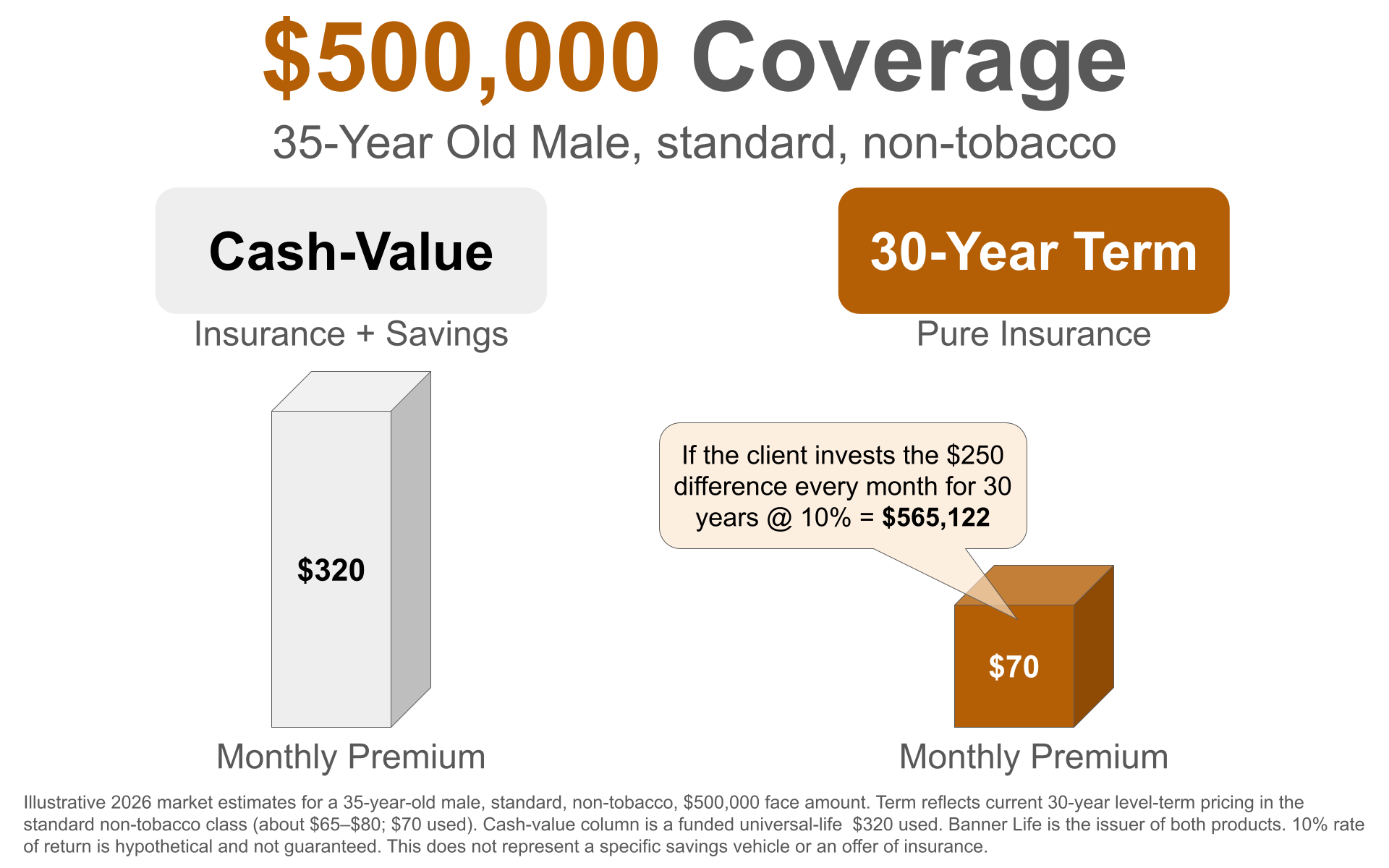
The 30-year term policy is $250 per month cheaper than the cash-value policy, and both are offered by the same company. Thus, the correct choice is to buy the term product and invest the $250 savings every month for 30 years. At 10% it will grow to $565,122.
At the end of 30 years when the term is over, the client will be 65. His family won't need life insurance coverage because they'll have fewer financial obligations (lower debt, kids are out of the house), and will be living off of their retirement income, including the $351k from his premium savings. This is called buying term and investing the difference.
Pro-Tip
Buy term insurance, not cash-value, and do your investing separately in a mutual fund. Don't combine the two.
The Two Variables in Life Insurance
1: Amount of Coverage
Determining the proper amount of coverage is based upon A + B.
A: Initial Liabilities
These are one-time expenses such as:
- Funeral expenses
- Outstanding debts
- Mortgage
- Children's future cCollege costs
B: Income Replacement
With the loss of income how much money would your family need per month to pay for ongoing expenses, after having their initial liabilities paid-off?
- Multiply that number by
240.
For example: if a family needs $4,000 per month (after liabilities are paid-off), then: 4000 x 240 = $960,000. At a 5% withdrawal rate that will generate $48,000 per year ($4,000 per month).
- So, if their initial liabilities are
$450,000(mortgage, car loan, debts, etc) and the income replacement is$960,000, then they need a total of$1,410,000of coverage.
“The wise way to find out how much life insurance you need to purchase is to add up the annual living costs for your dependents, or your annual contribution to them (your income), and then purchase a policy that is 25 times that sum.” ―Suze Orman
2: Length of Term
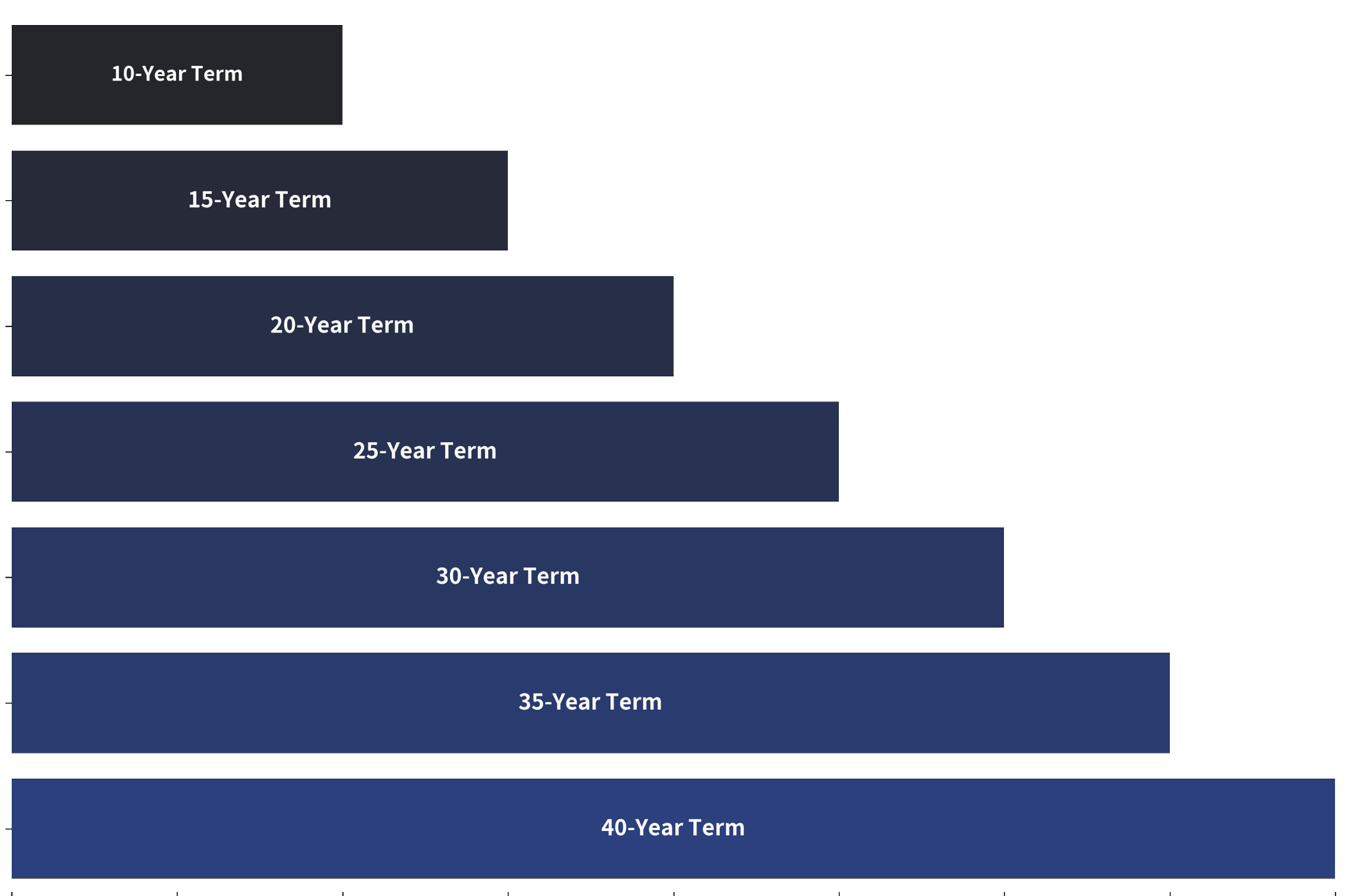
Determining the proper length of term is based upon the minimum time needed to eliminate your financial obligations (mortgage, college expenses, debt, income-replacement etc.). Remember, the longer the term the higher the premium, and vice versa, but the premium won't change during the term (as long as you don't get “scheduled” term).
Common Term Life Durations
Pro-Tip
I recommend getting the longest guaranteed level term you can afford with the proper face amount.
What the Experts Say...
Quotes
-
“With 55 cents of each premium dollar going into what are essentially savings accounts, buyers and holders of whole-life insurance are losing billions of dollars a year. The savings element of such policies returned on average between one percent and two percent in 1977…” ―Federal Trade Commission Report, July 10, 1977
-
"Financial planning for the average person can be very simple. If there is a need for life insurance, buy term (the cheapest) and invest the difference. Mutual funds, well managed, are generally the best way to invest in a growing America while taking advantage of the “pooled” investment money of mutual funds to reduce the risk factor." ―Arthur Milton, How Life Insurance Policies Rob You
-
"Buy cheaper term insurance and invest the difference." ―Norman Dacey, What's Wrong With Your Life Insurance
-
"In the next ten seconds, I'm going to tell you how you can save hours of time and thousands of dollars. Ready? Buy term life insurance."
-
"...maybe you've heard (and have already fallen prey to) the sales pitches from life insurance salespeople, most of whom love selling cash value life insurance because of the huge commissions it pays."
-
"Cash value life insurance is the most oversold insurance and financial product in the history of the industry." ―Eric Tyson, Personal Finance for Dummies
-
"The industry has a hidden agenda. It would rather sell you whole-life or universal life policies. It would rather sell you those policies even if they leave you underinsured. For nearly 50 years, Consumer Reports has been recommending that most buyers choose term insurance.” ―Consumer Reports, June 1985
Suze Orman

-
"Here’s the key lesson with life insurance: You want a policy that is called term life insurance — not whole life. And here’s some really good news: Term life insurance is incredibly affordable. You are going to be amazed at how little it costs to buy yourself peace of mind."
-
"Do not let anybody tell you that your life insurance policy is a good way to build extra savings. Fall for that and you will end up wasting thousands of dollars over the life of the policy.”
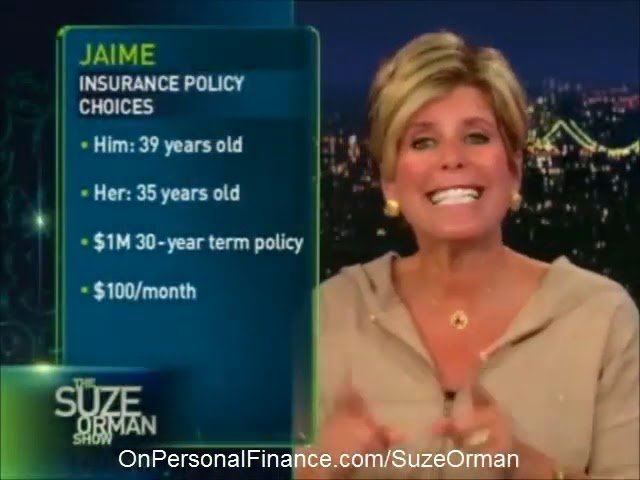
Youtube video: Suze Orman Term and Life Insurance Comparison

Youtube video: Susan Orman on Life Insurance 1

Youtube video: Susan Orman on Life Insurance 2
Dave Ramsey

"I, like most competent financial planners, recommend the purchase of low-cost level term insurance for ten to twenty years, and then invest the difference. I have reviewed many life policies, and I have never seen one that would beat buying term and investing the premium savings in an IRA in a 12 percent average annual return mutual fund.”
“Cash value life insurance is one of the worst financial products available."
"A cash value policy is an insurance product that packages insurance and savings together. Do not invest money in life insurance; the returns are horrible".
"Don't do cash value insurance! Buy term and invest the difference.”
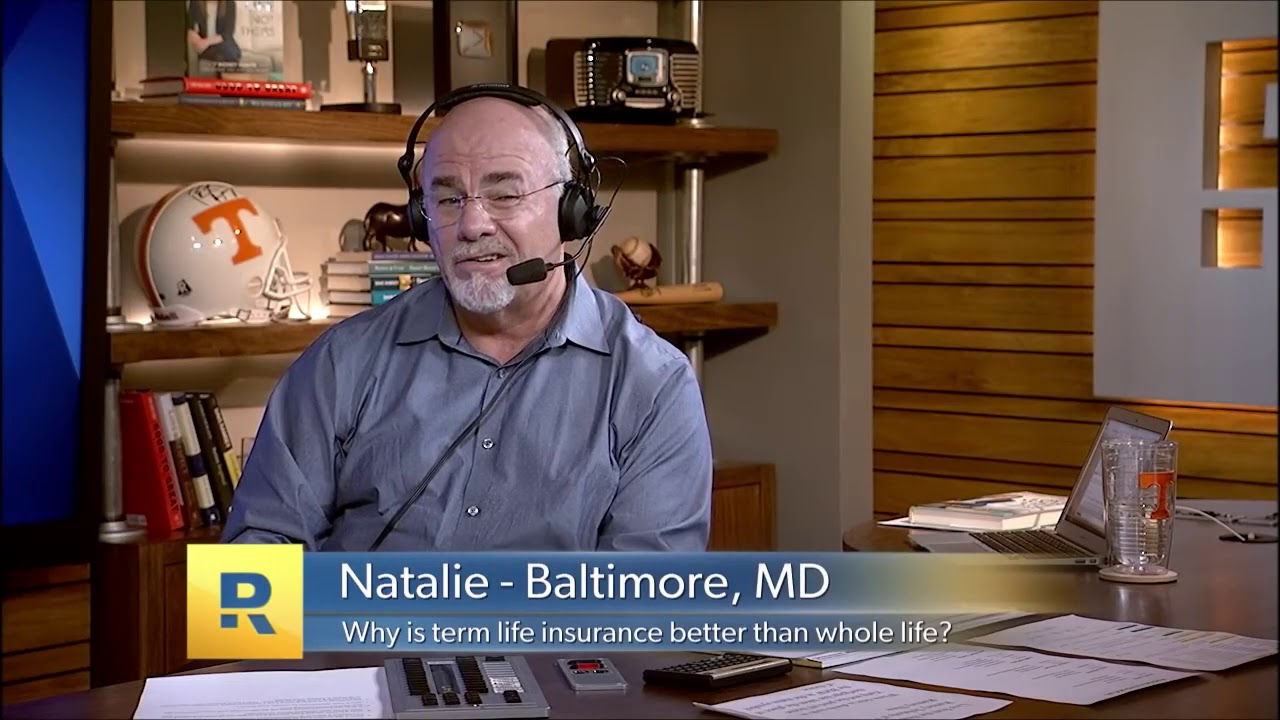
Youtube video: Why Is Term Insurance Better Than Whole Life Insurance
Youtube video: Dave Ramsey on Term Life Insurance