Re-Balancing: A Free Lunch In Portfolio Management
If an investment is successful, naturally, you'd want to stick with it. The last thing you'd want to do is sell some of your winners to invest more money in your investments that aren't doing as well. Right?
Well, no.
Unfortunately, human nature’s default investment policy is: let’s sell whatever has performed most poorly over the last block of time so we can buy more of whatever has gone up the most (selling when it's down and buying when it's expensive). We intuitively chase immediate past stellar investment performance, which is not, to put it charitably, an optimal long-term strategy.
One of the most powerful and practical antidotes to this counterproductive impulse is: re-balancing.
Quote
“Re-balancing means always shopping the sales, automatically.” ―Nick Murray
What is Re-balancing?
Re-balancing is an essential part of managing your investment portfolio by trimming back on winners allowing you to buy more of a laggard, protect your gains, and position your portfolio to benefit from the next uptick in the market. Basically, you are always selling high and buying low.
Suppose your mutual funds are allocated equally among three distinctly different equity sectors: large-company (33%), small-company (33%), and international (34%).
Over the course of a year or two, let’s say, the three sectors will very likely have appreciated differently to a point where they now each represent more or less than the original 33% of your overall portfolio.
The plan is to re-balance the three sectors back to their original percentages. Which means that you will sell off enough of the over-performers to reduce them back down to 33% of the portfolio — and reinvest the proceeds to bring the laggards back up to 33% each.
This rational discipline is the direct opposite of the most basic human instinct.
Quote
“Re-balancing is there to save us from ourselves.” ―Nick Murray
Re-balancing causes you regularly to be lightening up on sectors that have become relatively expensive (and thereby potentially more fully valued, if not overvalued) in order to increase your positions in those that have become relatively cheaper (and therefore potentially more attractively priced, as the current market shuns them).
Re-balancing creates a systematic way to buy low and sell high.
Quote
“We sell high for the express purpose of buying low.” ―Nick Murray
Rebalancing Example
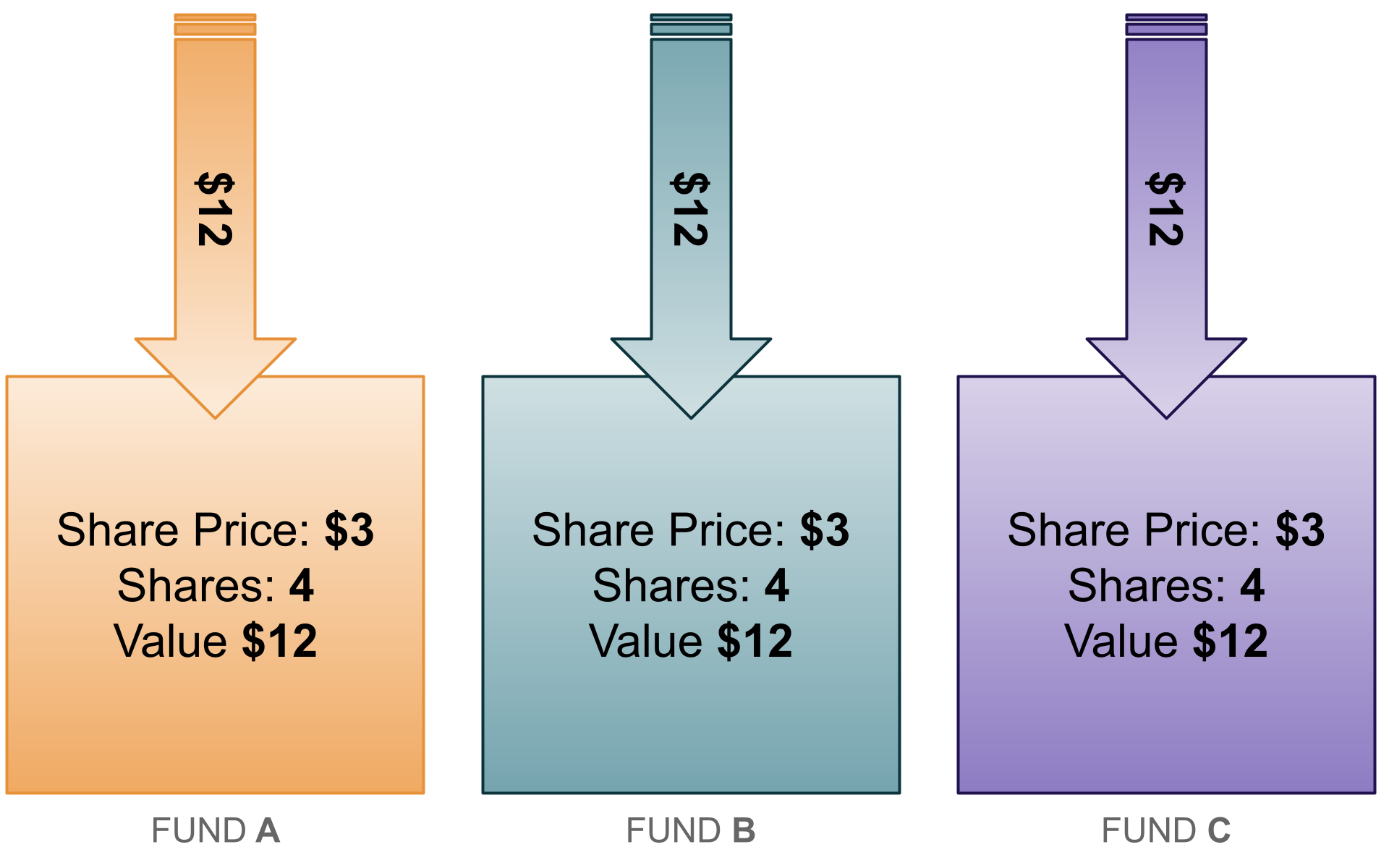
- Total shares: 12
- Value: $36
Six Months Later...
- Fund A grew faster than Funds B and C.
- Fund B decreased some.
- Fund C decreased the most.
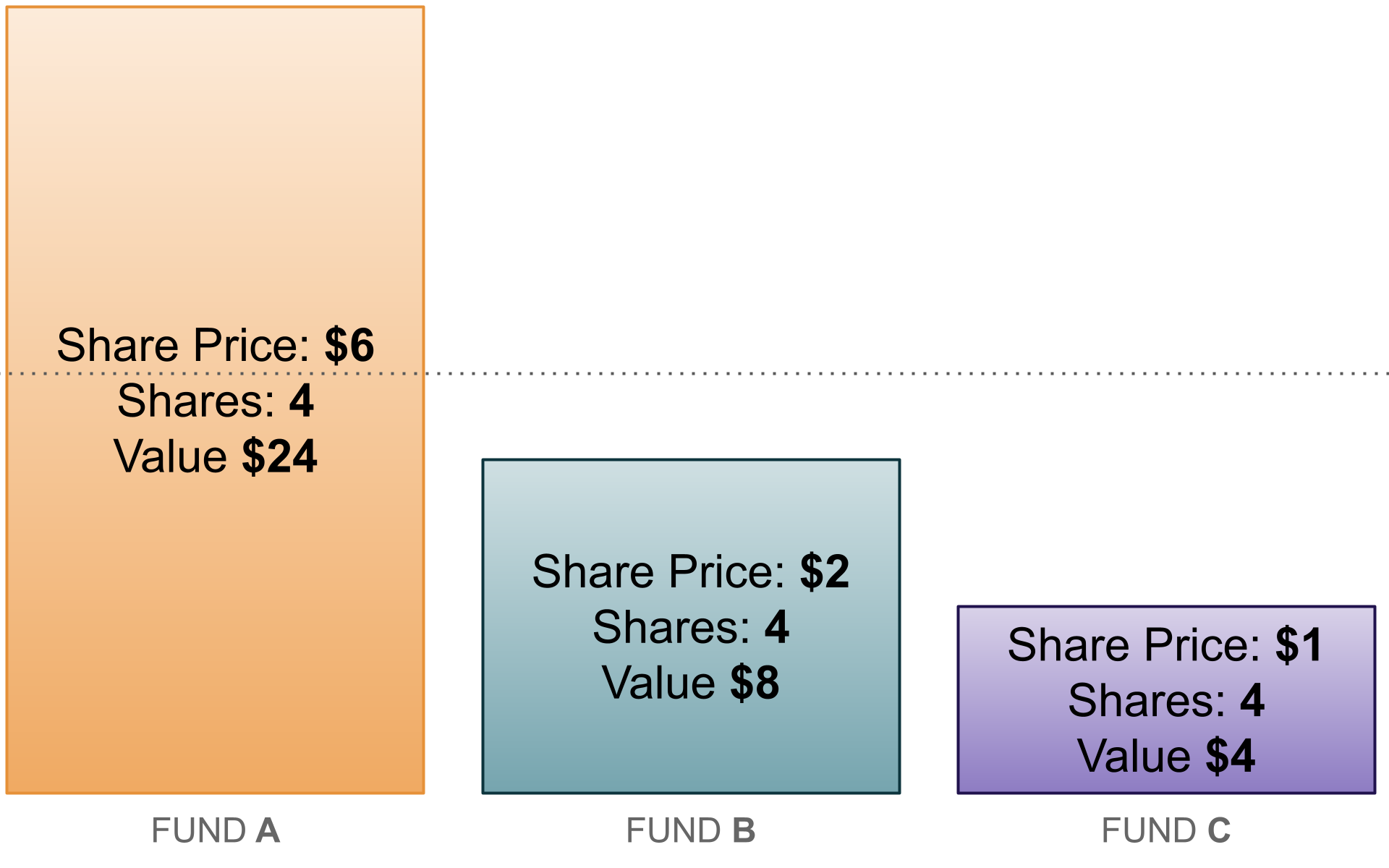
- Total shares: 12
- Value: $36
Rebalance
Let's rebalance by selling 2 shares of Fund A and use the proceeds to buy shares of Fund B and Fund C.
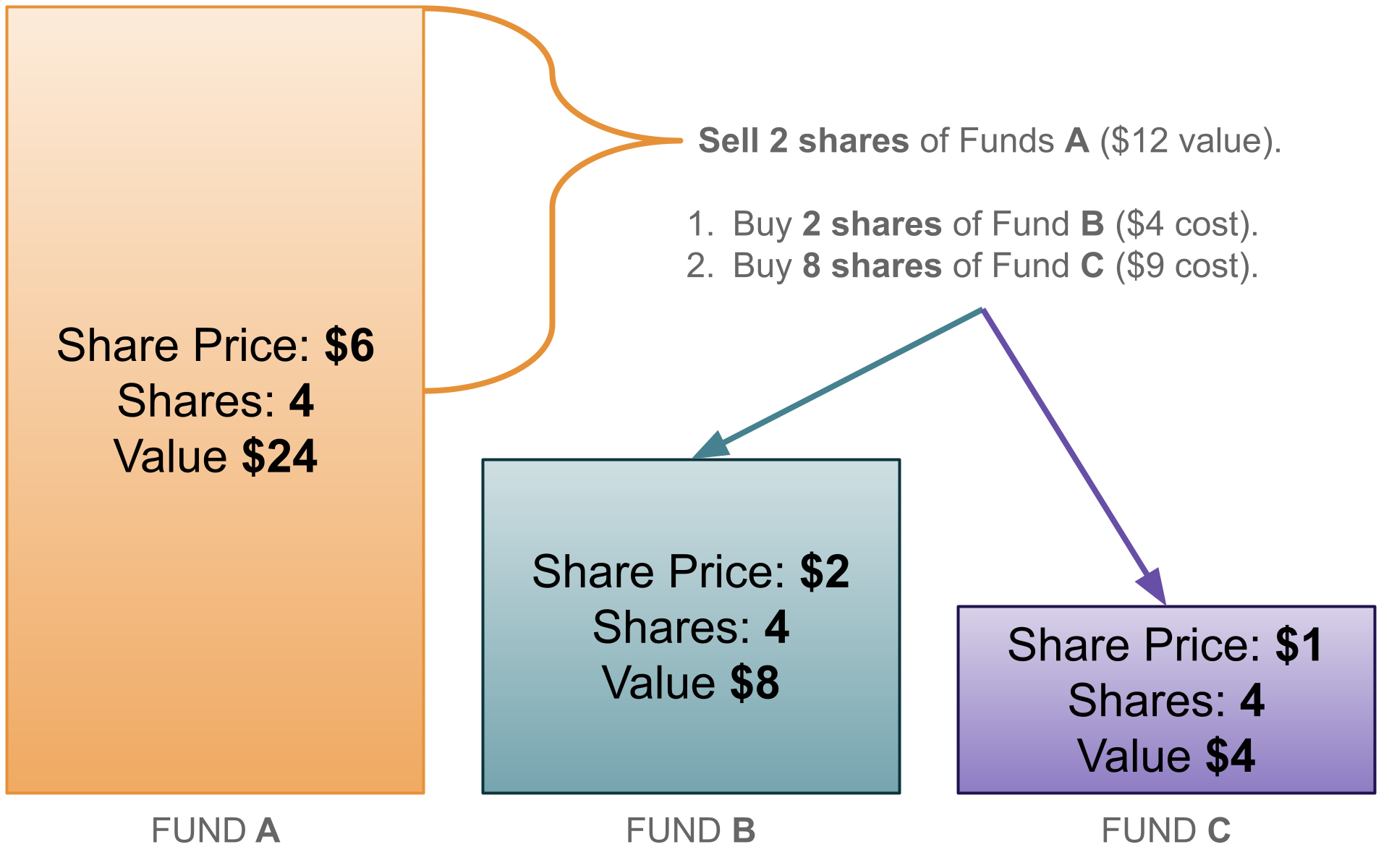
- Total shares: 20
- Value: $36
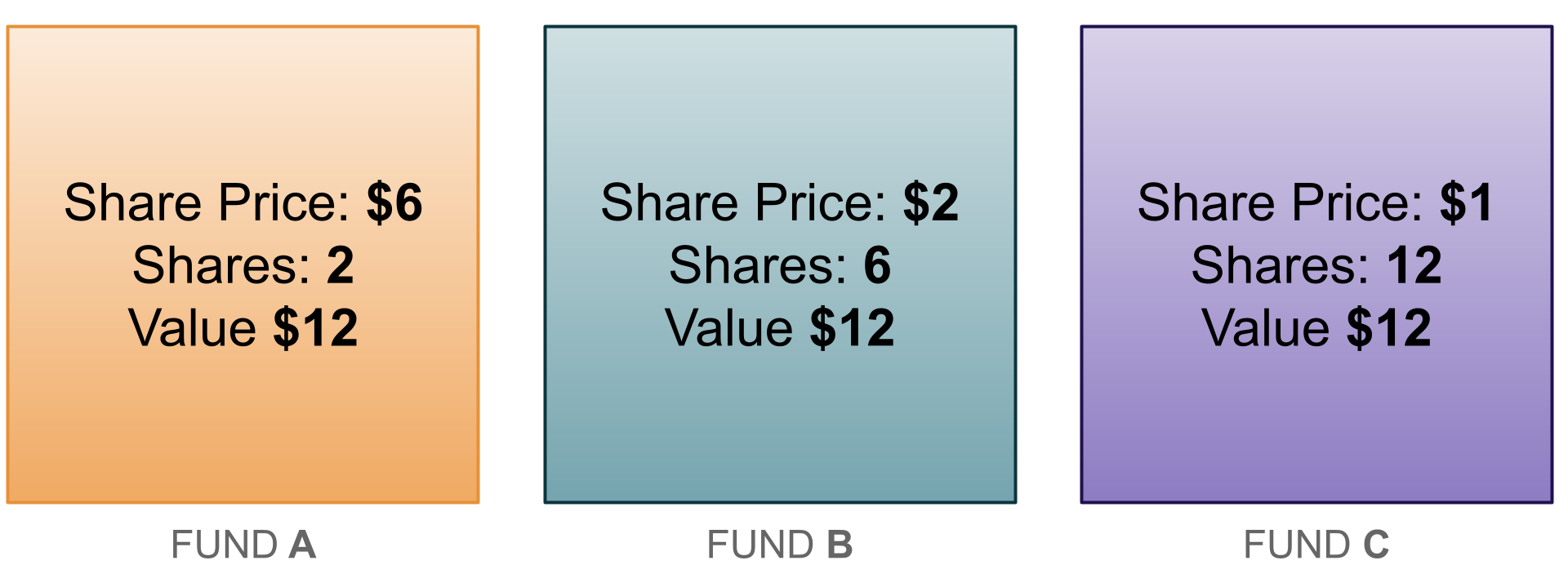
After Rebalancing
By rebalancing your portfolio, you have increased your number of shares from 12 to 20 without adding new money!
If this is done within a tax-advantaged account, such as a 401k, IRA or variable annuity, then there are no tax consequences!
Quote
“An annually re-balanced portfolio will outperform the same portfolio without re-balancing.” ―Nick Murray
The Benefit
If you re-balance regularly, it is possible to add an extra 0.3% - 0.5% on top of your returns over the long haul. Generally, the more frequent the rebalancing, the better.

Example: 1968-1991. 50/50 stock/bond mix.
Three Rules of Re-balancing
-
1. Only Re-Balance Non-Taxable Accounts
This includes qualified accounts and variable annuities. But if you re-balance a a taxable account then everytie you sell shares you'll pay capital gains tax. Howerver, there is are exceptions, such as the American Funds Growth Portfolio, because the re-blalancing is built-into the investment.
-
2. Re-Balance As Often As Possible
For example: American Funds allows quarterly, and Jackson variable annuities allows monthly re-balancing.
-
3. Set-Up Automatic Re-Balancing
Most fund families have the option to re-balance automatically on a schedule (see above). Always select this if offered.
Quote
“The most effective tool for overcoming the very human performance-chasing impulse is rebalancing — the act of systematically selling off pieces of overperforming sectors annually re-balanced portfolio will outperform the same portfolio without re-balancing.” ―Nick Murray
Resource
Read Nick Murray's one-page article Why We Rebalance.