Where and How to Invest for Long-Term Growth?
Written by Michael Paulding Thomas with care and no A.I.
Three Things
A successful investor needs three things: :
-
The Right Plan.
-
The Right Investment. (This is what we'll discuss today).
3, The Right Coach. (Hopefully you'll agree that that's me!)
I've previously written about the power of Compound Interest and the dramatic effect it can have on your long-term investing. But, you may ask, how and where is the best place to invest in order to take advantage of this magic?
-
Publicly-traded companies are the best long-term investment.
-
Equity mutual funds are the best method of investing in publicly-traded companies.
8 Facts of the Market Market Since 1926
The U.S. Publicly-Traded Companies Since 1926
-
1) Performance
- Inflation: 3.1%
- Residential Real Estate: 4.%
- Bonds: 6%
- Large U.S companies: 10%
- Small U.S companies: 12%
-
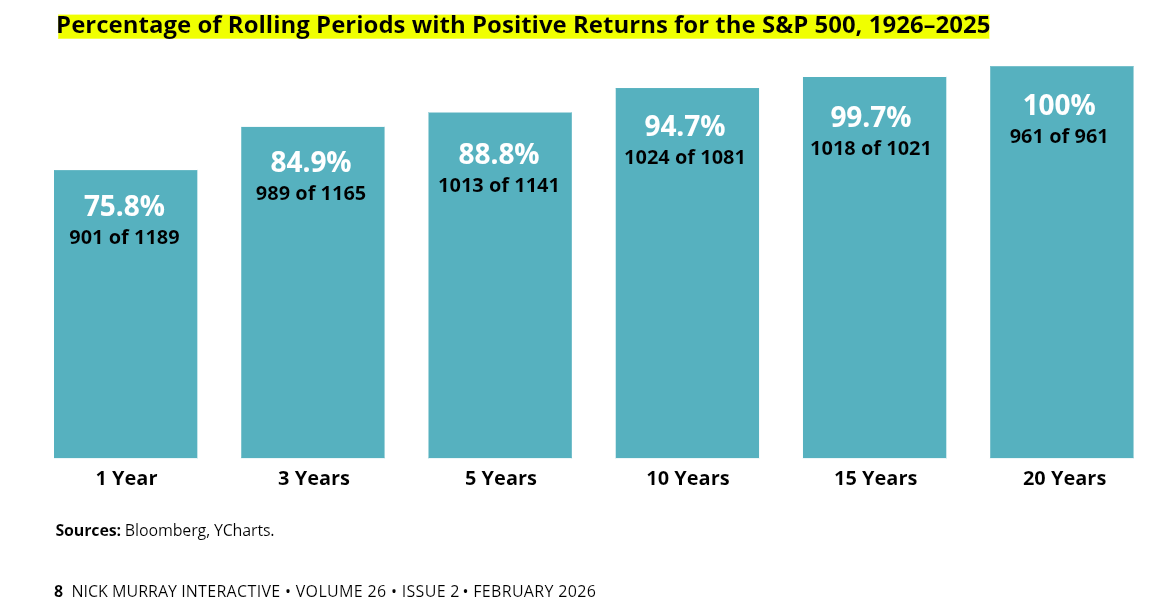
2) Annual Rolling Periods
- In the ninety-nine 12-month rolling-periods the market's return has been positive 94% of the time.
-
3) Twice a Year
- Declines of -5% occur about twice a year.
-
4) Every 18 Months
- Declines of -10% occur about once every 18 months.
-
5) Every Three Years
- Declines of -15% occur about once every three years.
-
6) Every Six Years
- Declines of -20% occur about once every six years ("Bear Market").
“Our plan continues to anticipate that at least 20% of our invested capital will appear to disappear temporarily about every five years or so.” ―Nick Murray
-
7) Bear Market Recovery
- 40 months (~1,200 days) is the average length of time it has taken for a Bear Market to breakeven.
“Since the end of World War II the longest it has ever taken an investor to recover an original investment in the stock market was the five-year, eight-month period from August 2000 through April 2006 (68 months).” —Jeremy Siegel, Stocks for the Long Run
-
8) After Bear It Comes Back Fast
- Returns in the first year after the five biggest market declines ranged from 36% to 137%, and averaged 70%.
Three Insights
- Volatility is not risk.
- You can't outsmart or trick the market.
- The Market does what it does. If you know what's going to happen, it's not risky.
The Stocks vs Companies Game
- “I buy companies, not stocks.” ―Warren Buffett
- “It's not a market of stocks. It's a market of companies.” ―Nick Murray
To drive home the companies versus stocks distinction, consider this thought experiment. List ten companies whose products and services your family uses nearly every day.
Expand for Sample Selection
- Apple. We have two Apple laptops and one iPhone.
- Alphabet. Most of our family owns Google Pixel phones and we google stuff a jillion times a day.
- Netflix. Somebody’s always watching something.
- T-Mobile/Mint. The wireless carrier of our phones.
- U.S Bank. We bank there.
- USAA. Carries our personal and business insurance.
- Procter & Gamble. The family consensus is that Bounty is, in actual fact, the quicker picker-upper.
- Amazon. Somebody’s always ordering something.
- Citibank. Many of our credit cards are issued by Citi and are in constant use.
- Berkshire Hathaway. Seems like our lives run on Duracell batteries!
Would you stop using any of these products and services if the stock market went down 50%?
No, of course not. And neither would just about anyone else. That’s the critical difference between stocks and companies. Stock prices can crater, and they often do, if only temporarily so far. But as long as real people continue to buy the products and services of great companies like the ones I’ve just named, they’ll endure. And, if history is any guide, they’ll resume the gradual increase in their earnings and dividends — a process that has delivered an average annual compound 10% return for almost a century.
Quote
“We invest in companies for the long-term, not buy stocks for the short-term.” ―this was told to me personally by one of Capital Group's fund managers.
The Method: Equity Mutual Funds
The best way to own the great companies of the world is not to buy them directly, but to own them indirectly via mutual funds.
Equity mutual fund = A broadly diversified, professionally managed collection of the world’s great publicly-traded, mainstream, profit-seeking companies.
Said another way: To own a basket of shares of the world’s most substantial, soundly financed, profitable and innovative global businesses, many of whose products and services we purchase regularly.
“We are long-term owners of well-diversified portfolios of superior companies that have consistently demonstrated their ability, in time, not merely to survive but to triumph over any and every earthly species of ‘crisis.’” ―Nick Murray
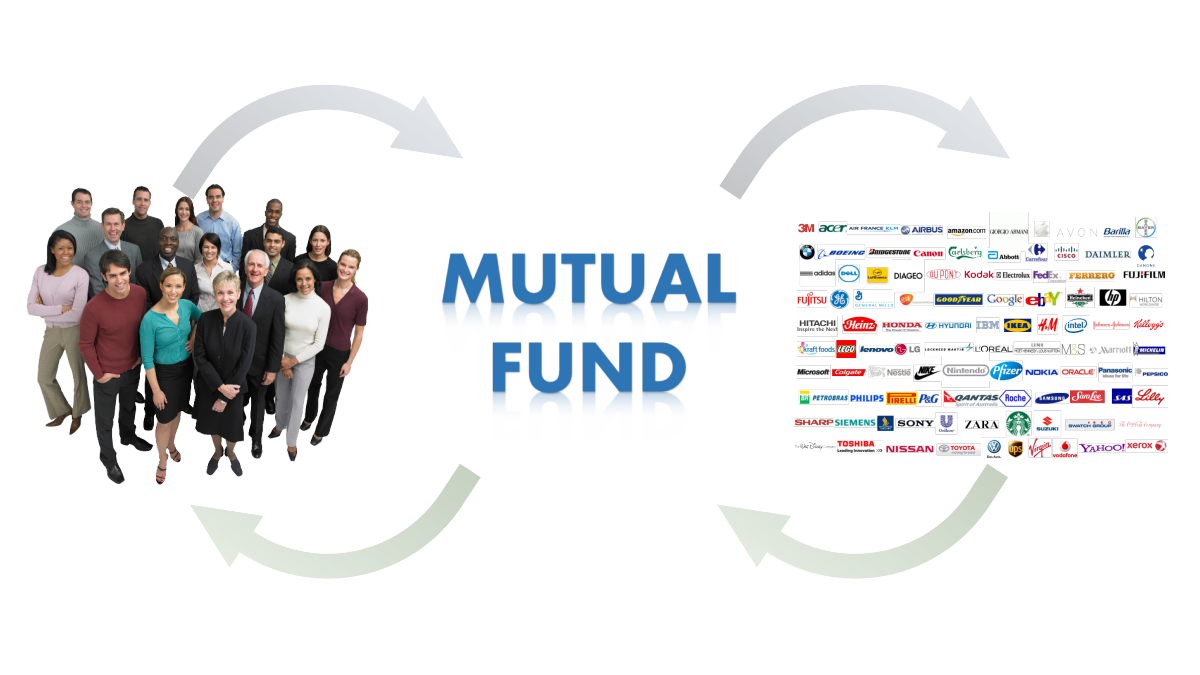
An all-equity mutual fund is a professionally managed type of collective investment that pools money from many people and invests it in a large number of companies (usually over 100). The mutual fund hires professional fund managers who choose exactly which companies to buy (and when to sell).
A mutual fund is a lot like a pie — no matter how small (or big) a slice you take, you still get the same ingredients.
Quote
“My fortune is invested in profit-seeking enterprises managed by largely rational men and women who respond to the reality of price signals every minute of every day. Price signals sent out by seven billion people making economic and financial decisions in their own best interests.” ―Nick Murray
7 Benefits of Equity Mutual Funds
-
1) Diversification is our Equity Sacrament
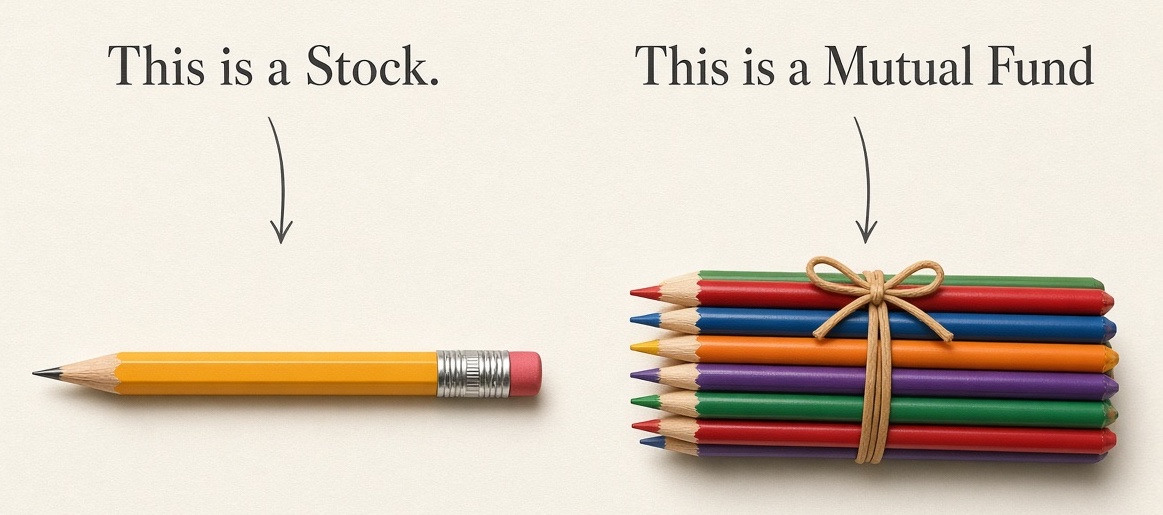
Perhaps the biggest benefit of mutual funds is their massive diversification.
One of my most-recommended investments, the American Funds Growth Portfolio, consists of seven individual mutual funds and collectively invests in 1,285 companies from 47 countries among dozens of industries.
This provides stability and is the ultimate risk management device.
-
2) 100% Equities
I advise to exclusively use mutual funds that invest 100% in publicly-traded companies (equities). No bonds, options, futures, precious metals, alternatives, hedges, crypto, or real estate etc.
-
3) Consistent Performance
Example: the American Funds Investment Company of America has averaged 12.2% since 1934, net of fees.
-
4) Two Layers of the Best Human Thinking
- The executives running the companies the fund us investing into.
- The mutual fund managers who decide which companies to invest in.
-
5) Relatively Low Volatility
The dramatic up and down fluctuations (volatility) is reduced compared to other investments because because of their massive diversified.
-
6) Lower Stress and Maintenance
Once you've invested in a mutual fund there is nothing more to do. All investment decisions are made by the fund managers. It's an investment on automatic pilot.
-
7) Accessibility
Your money is accessible within five days.
Quote
“It can be historically demonstrated that the best defense against retaining your purchasing power through retirement is to invest in a broadly diversified portfolio of the world’s great companies. And the finest method of investing in them are good, long-term mutual funds.” ―Nick Murray
Read Nick Murray's article "The Companies We Own"
What the Experts Say about Long-Term Equity Investing
This is a selection of my favorite investment quotes, curated over three decades, which capture the essence of my all-equity investment philosophy.
Nick Murray Quotes
Nick Murray is the Advisor to Advisors and prolific author. With 50+ years of experience in the investment markets, noted author, he is an expert in the art and science of helping individual investors work toward reaching their investment goals. He is the recipient of the 2007 Malcolm S. Forbes Public Awareness Award for Excellence in Advancing Financial Understanding.
Learn more about Nick Murray here.
-
“Successful investing is counterintuitive.”
-
“I own mainstream equities for two reasons: (1) second only to love, the most powerful force on earth is human ingenuity; and (2) equities are the only asset class that fully captures human ingenuity.”
-
“The stock market has been going up all your life!”
-
“The only way to achieve the full permanent advance of equities is to be willing to ride out their full temporary decline.”
-
“It is those 'risky' equities that provide the greatest long-term safety of principle.”
-
“Insure against what can go wrong in order to acquire the luxury of investing for what can go right.”
-
“It's never the wrong time to put some more money with the right money manager.”
-
“We are long-term owners of well-diversified portfolios of superior companies that have consistently demonstrated their ability, in time, not merely to survive but to triumph over any and every earthly species of 'crisis.'”
-
“No one knows for sure why the equity market does what it does on any random day. And no long-term, goal-focused, patient, disciplined investor cares.”
-
“Never interrupt the compounding.”
-
“The average person's rather bizarre view of the stock market is primarily due to a loss of long-term perspective.”
-
“The patient, disciplined long-term investor has historically been rewarded for standing fast in a crisis.”
-
“Those who judge their portfolio by its performance relative to some narrow benchmark are focusing on an issue that is largely irrelevant to their ultimate financial success. The only benchmark that you should care about is one that indicates whether or not you’re on track to accomplish your financial goals.”
-
“The economy is not at all correlated to the markets. It is one of the best fictions of the culture. The culture believes that the economy drives the market and thus is predictive. Wrong. This is one reason why we invest in companies not countries.”
-
“An intelligently diversified equity portfolio will always 'underperform' some narrow sector of stocks. That's how you know you're truly diversified.”
-
“The only way you can lose money is to mistake a temporary decline for a permanent loss.”
-
“Volatility isn't really risk but uncertainty.”
-
“The economy is not at all correlated to the markets. It is one of the best fictions of the culture. The culture believes that the economy drives the market and thus is predictive. Wrong. This is one reason why we invest in companies not countries.”
-
“Without an adequately compensated advisor to help with selection and discipline, the individual investor will simply make all the classic and horrendous mistakes.”
-
“Defend purchasing power with equities, rather than defending principle with bonds (or other fixed accounts).”
-
“The cardinal tenet of my philosophy is that all long-term investment success comes from acting on a plan, while all failure is precipitated on reacting to the markets.”
-
“Volatility is merely randomness around a permanent uptrend.”
-
“EQUITIES: The only asset class that fully captures human ingenuity, which is the most valuable asset on earth.”
-
“I suggest that perhaps if we checked our actual dividend income every 90 days instead of checking our account balances every 90 minutes, we might become better investors.”
-
“Permanent loss of capital in equities has no historical precedent. Permanent loss in a well-diversified equity portfolio can only be triggered by an investor's irrational decision to sell in a decline.”
-
“The dominant determinant of long-term, real-life financial outcomes is not investment performance. It is investor behavior.”
-
“You must tune this stuff out, it doesn't matter. The economy and government are uncorrelated to the market. Don't make investment policy out of your distaste for the government.”
-
“Timing the market is a fool’s game, whereas time-in the market is your greatest natural advantage. ”
-
“Always make investment policy decisions based upon history rather than on headlines.”
-
“Every crisis has appeared to be totally unprecedented as we were going through it. Just as this one does. This time is no different.”
-
“I will never own enough of any one thing to be able to make a killing in it. Nor will I ever own enough of any one thing to be able to be killed by it. Diversify.”
-
“We’re not even investing in “the stock market” as such. Rather, we are investors in companies.”
-
“Equities are the ideal solution to clients’ need to accumulate enough capital to retire comfortably during their working lives. And then as the ideal (if not the only) vehicle for increasing their income further and further above consumer inflation through three decades of a two-person retirement.”
-
“Our plan continues to anticipate that at least 20% of our invested capital will appear to disappear temporarily about every five years or so.”
-
“The Fundamental Retirement Question: Will I outlive my money, or will my money outlive me? The Fundamental Retirement Challenge: To keep my retirement income growing as my cost of living continues to increase.”
-
“Gold isn't an investment at all, it just sits there. It doesn't produce anything.”
-
“When stock prices are going down, the enduring value of the underlying companies is going up.”
-
“Good markets only teach bad lessons.”
-
“Risk is measured as the probability that you won’t meet your financial goal. Investing should have the exclusive objective of minimizing this risk.”
-
“We are goal focused and planning driven, in a culture that is market focused and performance driven. We are planning long term, patient, disciplined investors. We build portfolios based upon your goals, we look neither to the left at market volatility, nor to the right at economic news but straight ahead at your retirement.”
-
“No one knows for sure why the equity market does what it does on any random day. And no long-term, goal-focused, patient, disciplined investor cares.”
-
“The great truth is that the premium return of equities is earned purely by a willingness to ride out their temporary declines. Yet it is those temporary declines upon which human nature fixates.”
-
“Volatility is not risk. If you can't sit through a -15% temporary decline every year, and an average -30% temporary decline every 5 years, you have no business being an equity investor.”
-
“I don’t know what 'the stock market' is going to do over the next 12 months; neither does anyone else. And it doesn't matter.”
-
“Bull markets go on far longer than bear markets do; they increase equity values far more than bear markets diminish them.”
-
The economy can’t be forecast. The market can’t be timed. Therefore, the correct time to buy equities for the long run is whenever you have the money. By the same logic, the correct time to sell equities is whenever you need the money. Everything else is commentary.
-
“Staying fully invested during temporary market declines is the only sure way to capture the entirety of the market’s permanent advance. It is not possible consistently to sell out of falling markets, and later buy back into already advancing markets.”
-
“The more often you trade, the lower your return. The more often you go in and out of the market, the further below the index your returns will be. Hence we don't do market timing.”
-
“Never try to make long-term investment strategy out of short- to intermediate-term disruptions.”
-
“By the time investors become convinced that a crisis has passed, the market will long since have recovered, and they will have missed a huge part of a historic recovery.”
-
“Today's financial crisis invariably becomes yesterday's news.”
-
“Every day you hang in there, your reinvested dividends are buying more shares at fire-sale prices from somebody who’s panicking out — who’s making the mistake you refuse to make.”
-
“The best predictor of the trajectory of a market recovery is the trajectory of the previous decline.”
-
“No financial, fiscal, monetary, economic or political crisis ever in the history of the world has been capable of inflicting a permanent loss on equity values.”
-
“Long-term the market is completely predictable. Short-term it is utterly unpredictable. I know two things: 1) The market goes up. 2) The market goes down. I don't know when they happen, nor how long they last (and I don't care).”
-
“It is the engine that drives the returns. The premium long-term return of equities is simply an efficient market’s way of pricing in their extreme randomness in the short term.
-
Equities pay 10% long-term because in any given year they might be up 20% or down 20%, and you’ll never know which.”
-
“Dollar Cost Averaging is a strategy in which mutual fund shares are purchased in fixed dollar amounts every month, regardless of the market. Thus, as prices rise fewer units are bought, and as prices fall more units are bought. Dollar Cost Averaging is almost real-time re-balancing.”
-
“Virtually no portfolio strategy more reliably produces worse returns than performance-chasing.”
-
“No financial, fiscal, monetary, economic or political crisis ever in the history of the world has been capable of inflicting a permanent loss on equity values.”
-
“Every crisis has appeared to be totally unprecedented as we were going through it. Just as this one does. This time is no different.”
-
“We create robust plans by looking back over very long time periods.”
-
“All the money that has ever been 'lost' in all the temporary equity market declines have always returned to other people: long-term investors with faith in the future; patience, and the discipline to continue working their long-term plan.”
-
“In three-decade baby boom retirements, the only rational investment objective isn’t income; it’s growth of income. Your income has to keep rising on at least the same trajectory as your living costs, or you’ll run out of money. No problem: the dividends of mainstream equities have, in the aggregate, been increasing at almost twice CPI inflation for as long as any of us have been alive.”
-
“There has never been, in the history of the world, been an asset class — or indeed any financial vehicle — which generates real wealth as reliably and as effortlessly as do mainstream American common stocks. Moreover, those equities are available in an almost infinite variety of packaged forms, at little or no direct cost, to even the smallest investor on essentially the same terms as those offered to people who’ve already generated huge fortunes.”
Warren Bufett Quotes
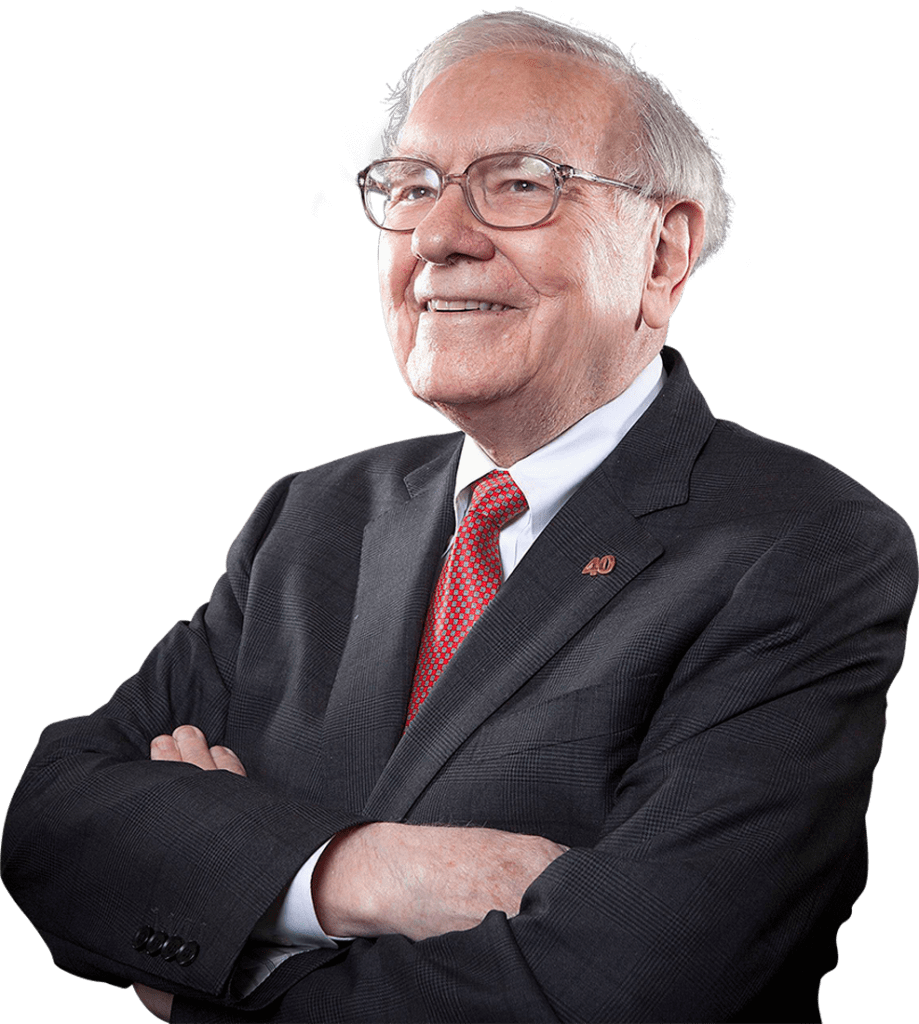
Warren Edward Buffett is the world’s most admired but least imitated investor. He was formerly the chairman and CEO of Berkshire Hathaway.
Second only to Nick Murray his investment philosophy has shaped mine the most.
Story Time
On October 19, 1987, 'Black Monday', the S&P 500 Index dropped 23%. Warren Buffet's holdings in Berkshire Hathaway plunged more than $300 million dollars.
Had he been unnerved and sold, he would have "lost" $300 million.
However, he didn’t sell and the value of his shares by February 2001 (14 years later) were worth over 22 times more than they were on Black Monday ($6.6 billion).
-
“Do not save what is left after spending. But spend what is left after saving.”
-
“Every decade or so, dark clouds will fill the economic skies, and they will briefly rain gold.", Berkshire Hathaway's 2016's annual report
-
“You could take all the gold that’s ever been mined, and it would fill a cube 67 feet in each direction. For what that’s worth at current gold prices, you could buy all, not some, of the farmland in the United States. Plus, you could buy 10 Exxon Mobils, plus have $1 trillion of walking-around money. Or you could have a big cube of metal. Which would you take? Which is going to produce more value?”
-
“We do not have, never have had, and never will have an opinion about where the stock market, interest rates or business activity will be a year from now.”
-
“Don't watch the market closely. Buy and hold is the best strategy. The money is made in investments by investing, and by owning good companies for long periods of time.”
-
“The stock market is a device for transferring money from the impatient to the patient.”
-
“If you cannot control your emotions, you cannot control your money.”
-
“If you buy things you don't need, you'll soon have to sell things you do need.”
-
“If you mix politics with your investment decisions, you're making a big mistake.”
-
“Be fearful when others are greedy. Be greedy when others are fearful.”
-
“The stock doesn't know you own it. You have feelings about it, but it has no feelings about you. The stock doesn't know what you paid. People shouldn't get emotionally involved with their stocks.”
-
“The investor of today does not profit from yesterday's growth.”
-
“The dumbest reason in the world to buy a stock is because it’s going up.”
-
“You could be somewhere where the mail was delayed three weeks and do just fine investing.”
-
“Bad news is an investor's best friend and if you're not ready for stocks to drop by 50%, you shouldn't be investing.”
-
“Whether we're talking about socks or stocks, I like buying quality merchandise when it is marked down.”
-
“Much success can be attributed to inactivity. Most investors cannot resist the temptation to constantly buy and sell.”
-
“My favorite holding period is forever.”
-
“I realized that technical analysis didn't work when I turned the chart upside down and didn't get a different answer.”
-
“I buy companies, not stocks.”
-
“Market forecasters will fill your ear but never fill your wallet.”
-
“The true investor welcomes volatility.”
-
“A number of smart people are involved in running hedge funds. But to a great extent their efforts are self-neutralizing, and their IQ will no overcome the costs they impose on investors.”
-
“Overwhelmingly, for people that can invest over times, equities are the best place to put their money. Bonds might be the worst place to put their money - they are paying very, very little, and they're denominated in a currency that will decline in value.”
-
“Unless you can watch your stock holding decline by 50% without becoming panic-stricken, you should not invest in the stock market.”
-
“Gold gets dug out of the ground in Africa, or someplace. Then we melt it down, dig another hole, bury it again, and pay people to stand around guarding it. It has no utility. Anyone watching from Mars would be scratching their head.”
-
“My wealth has come from a combination of living in America, some lucky genes, and compound interest.”
-
“Derivatives are financial weapons of mass destruction.”
-
“I think the worst mistake you can make in stocks is to buy or sell based on current headlines.”
-
“Listening to the macro or market predictions of others is a waste of time. Indeed, it is dangerous because it may blur your vision of the facts that are truly important. When I hear TV commentators glibly opine on what the market will do next, I am reminded of Mickey Mantle's scathing comment: 'You don't know how easy this game is until you get into that broadcasting booth'.”
-
“It's a mistake paying attention to the day to day fluctuations of a stock - it makes no difference. ”
-
“If Fed Chairman Alan Greenspan were to whisper to me what his monetary policy was going to be over the next two years, it wouldn’t change one thing I do.” (1994)
-
“Success in investing doesn't correlate with IQ.”
-
“Do not take yearly results too seriously. Instead, focus on four or five-year averages.”
-
“We will continue to ignore political and economic forecasts, which are an expensive distraction for many investors and businessmen.”
-
“Nobody buys a farm based on whether they think it’s going to rain next year. They buy because they think it's a good investment over 10 or 20 years. It's the same with stocks. Think of stocks as a part ownership of a business. It's not that complicated.”
-
“I collect businesses and friends, not gold.”
-
“If a business does well, the stock eventually follows.”
Peter Lynch Quotes
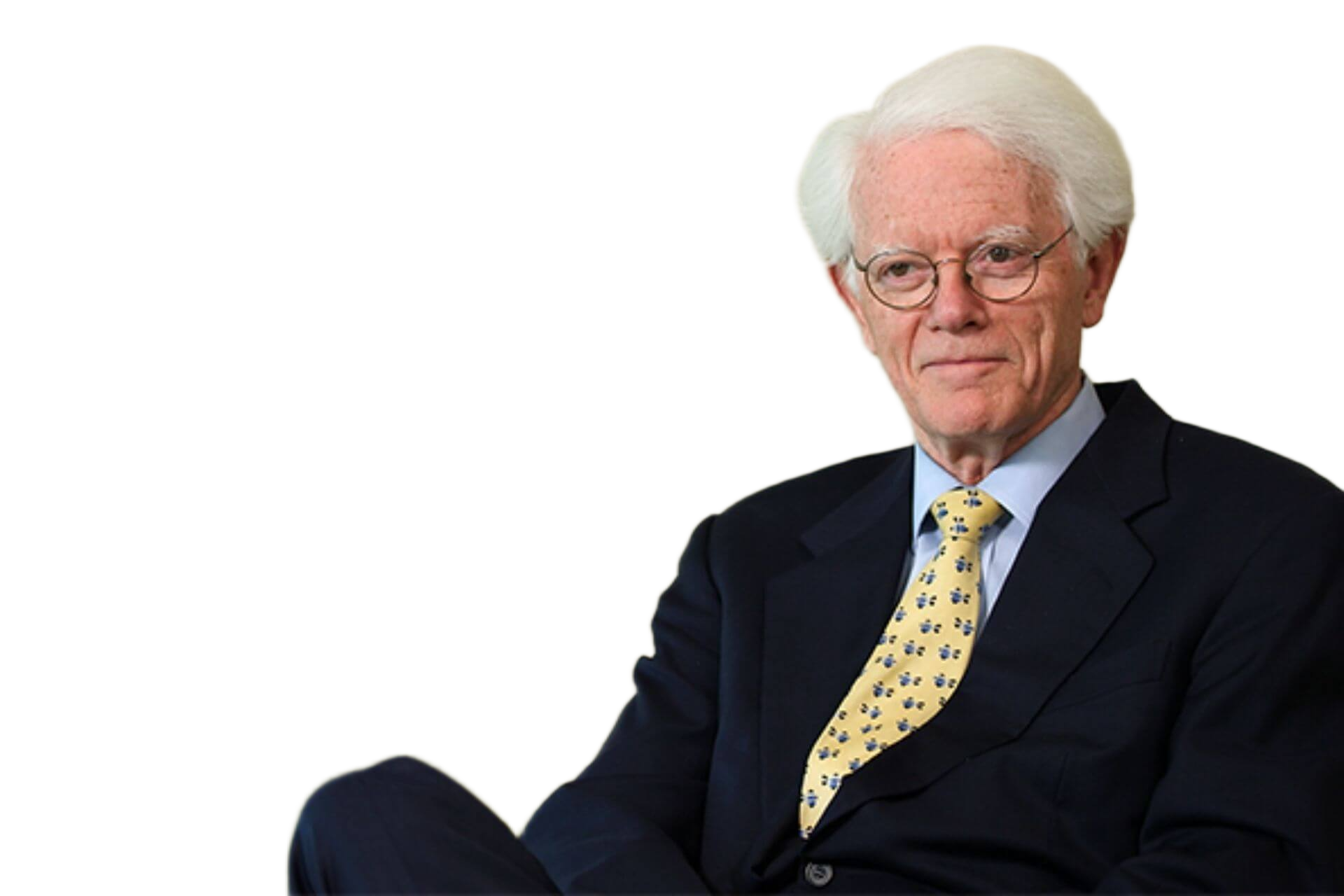
Peter Lynch is an American investor, philanthropist, and he was the manager of the Magellan mutual fund between 1977 and 1990 (one of the most successful funds in history).
-
“I know exactly what will happen in the market in the next 10 - 20 years; it will go up. But I have no idea what will happen Monday morning.”
-
“Remember that there’s a company behind every stock, and that there’s only one real reason why stocks go up. Companies go from doing poorly to doing well, and small companies grow to large companies.”
-
“Although it's easy to forget sometimes, a share of stock is not a lottery ticket... it's part-ownership of a business.”
-
“Far more money has been lost by investors preparing for corrections, or trying to anticipate corrections, than has been lost in corrections themselves.”
-
“Charts are great for predicting the past.”
-
“If you spend more than 13 minutes analyzing economic and market forecasts, you’ve wasted 10 minutes.”
-
“An Investor's worst enemy is not the stock market but his own emotions.”
-
“The best way to make money in stocks is not to be scared out of them.”
-
“When you sell in desperation, you always sell cheap.”
-
“Unless you are a short seller, it never pays to be pessimistic.”
-
“Although it's easy to forget sometimes, a share of stock is not a lottery ticket. It's part ownership of a business.”
Jeremy Siegel Quotes
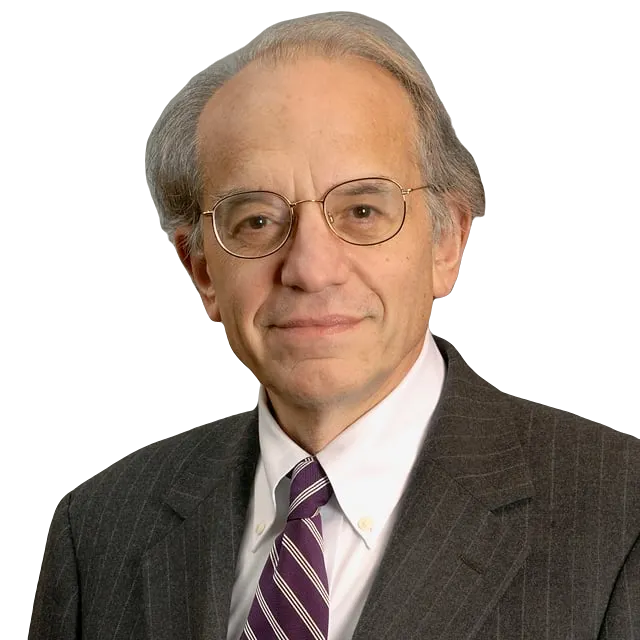
Jeremy James Siegel is the Russell E. Palmer Professor of Finance at the Wharton School of the University of Pennsylvania in Philadelphia.
He is the author of the seminal investment book Stocks for the Long Run. This is Nick Murray's favorite investment book.
-
“Since the end of World War II the longest it has ever taken an investor to recover an original investment in the stock market was the five-year, eight-month period from August 2000 through April 2006 (68 months).”
-
“Whatever hedging property gold possesses, this precious metal will likely exert a considerable drag on the return of a long-term investor’s portfolio.”
-
“Stocks are the best financial asset if you fear rapid inflation since many countries with high inflation can still have quite viable, if not booming, stock markets. Fixed-income assets, on the other hand, cannot protect investors from excessive government issuance of money.”
-
“Not only have fixed-income returns lagged substantially behind those on equities, but because of the uncertainty of inflation, bonds can be quite risky for long-term investors. No one denies that, in the short run, stocks are riskier than fixed-income assets. But in the long run, history has shown that stocks are actually safer than bonds for long-term investors whose goal is to preserve the purchasing power of their wealth. The inflation uncertainty that is inherent in a paper money standard means that “fixed income” and “fixed purchasing power” are not the same thing.”
-
“To be a successful long-term investor is easy in principle but difficult in practice. It is easy in principle because the strategy of buying and holding a diversified portfolio of stocks, forgoing any forecasting ability, is available to all investors, no matter what their intelligence, judgment, or financial status. Yet it is difficult in practice, because we are all vulnerable to emotional forces that can lead us astray.”
-
*“Are you saying that perhaps I should not look at my stocks too frequently? You can look at them all you want, but don’t alter your long-term strategy."
-
“The worst course an investor can take is to follow the prevailing sentiment about economic activity. That will lead investors to buy at high prices when times are good and everyone is optimistic, and sell at the low.”
-
“From a broader perspective, individual investors should not fear short-term market volatility. Should you not want to shop in a store where every so often it announces '10 percent to 20 percent off the price of all items for the next 30 minutes?; Short-run volatility has always been part of the stock market.”
-
“Although most investors express a strong distaste for market fluctuations, volatility must be accepted to reap the superior returns offered by stocks.”
-
“It is easy to overreact to the continuous stream of optimistic and pessimistic news, causing an investor to sell near the low or buy near the high.”
-
“The importance of dividends for providing wealth to investors is self-evident. Dividends not only dwarf inflation, growth, and changing valuations levels individually, but they also dwarf the combined importance of inflation, growth, and changing valuation levels.”
-
“Proper investment strategy is as much of a psychological as an intellectual challenge. It is often best to seek professional help to structure and maintain a well-diversified portfolio.”